
Shawn Allen Bell
“I use AI not because I can’t create — but because I can create faster.”
How I got to AI
When I was eleven, I made flyers for local businesses. Back then, design meant rulers, glue sticks, and hand-lettered type. Every layout was an act of craft, not convenience. Then Microsoft Office arrived, and suddenly anyone with a home computer and a printer became their own “designer.” Overnight, what had once been a learned skill became a weekend warriors dream.
I didn’t know it then, but that moment was the start of a pattern that would repeat itself throughout my entire creative life.
By the 1980s, I had fallen completely in love with illustration — my passion and my strength. I spent hours in my room sketching portraits, studying anatomy and proportion, drawing posters of people for no other reason than the joy of seeing them come alive on paper. My mentor was Norman Rockwell. I loved how he could fit a whole story into a single frame — the emotion, the humor, the humanity. I studied his work endlessly, trying to emulate his storytelling through line and light.
I was also heavily influenced by an artist named Rex, whose understanding of anatamy, especially faces and hair became an obsession to me. It pushed me to think beyond realism — to see personality in gesture, not just accuracy. By the time I graduated high school, I had already developed a solid sense of anatomy and design. I was illustrating professionally for companies like Luster Products and Soft Sheen, still a teenager but already getting paid to do what I loved.
After high school I bounced around a few colleges, never quite finding one that held my interest — until I discovered The American Academy of Art in Chicago. A traditional fine arts school, the kind that still believed in portfolios and paint. You couldn’t just enroll; you had to show your work and be approved by their board. Getting accepted was an honor. One of my mentors, Rex, had gone there years before me, and it felt like I was following in his footsteps.
But the school had changed. The art world had changed. The Academy was leaning heavily into digital art, building out a full computer-based curriculum focused on Adobe products — Photoshop, Illustrator, and QuarkXPress, the predecessor to InDesign. Those three programs would later become the foundation of my design career.
There, I met a new circle of friends — artists who shared my passion for drawing, especially comic books. Together we landed what felt like a dream job: coloring comics digitally. We used a proprietary program that was functional but limited — a stepping stone between the analog past and the digital future.
It didn’t last. For a while, it was magic — drawing, coloring, and reading comics every day, getting paid to do what I loved. But once again, technology stepped in on the side of business. Larger studios with deeper pockets, armed with the latest software and high-end equipment, began taking over. They could hire fewer people who were more technologically skilled, and they worked faster using Photoshop, which quickly became the industry standard.
Just like that, our contracts disappeared. It wasn’t a question of talent — it was a question of access. That was the moment I learned that technology doesn’t always reward the artist; sometimes it just makes the art cheaper to produce.
Later, I turned to video editing. That, I thought, was safe. It was a subconscious decision — maybe even an act of optimism. I had already been stung twice by the technology beast, and I told myself that this time, my talent and technical skills would keep me ahead of it.
I had access to a high-end DV camcorder, and I’d just discovered Adobe Premiere, which allowed non-linear video editing — a game changer at the time. Around the same period, DVDs were new, and the ability to burn discs felt like the cutting edge of creative technology. I saw opportunity. I saw dollar signs.
Before long, I had built a small wedding video business — shooting, editing, authoring, and burning DVDs. For a moment, it felt like I had finally found my lane again. It was too easy, almost too good to be true.
Then came iMovie — and later, the iPhone. Suddenly, the same clients who used to hire me were editing their own videos between meetings. The revolution had come for me again. It was Microsoft Word all over again.
So I moved again — into 3D. It was still difficult, still technical, still felt like true craftsmanship. Modeling anatomy, sculpting detail, building rigs, lighting scenes — this was mastery. No one’s automating this, I told myself.
I took out another school loan and enrolled at Full Sail University, known for its 3D animation program. 3D had always fascinated me — I’d tinkered with bootleg copies of LightWave years before, but never truly grasped it. Now, stripped of my other paths — video editing overtaken, graphic design overcrowded, illustration labeled outdated. So I went, I learned Maya, Nuke, Z-Brush, Unreal Engine, it was beautiful, I thought — this was my chance to start fresh with something automation couldn’t touch.
I was wrong.
I hadn’t even graduated yet when MetaHumans dropped. Suddenly, what once took months of sculpting and refining became minutes of configuration. The impossible became drag-and-drop.
I was defeated. For awhile I left art alone, but that didnt last, I soon thought id give it one last try.
My last stand was web design — something I never particularly cared for, but I was determined to understand. I was never a coder by nature; HTML felt like a foreign language, CSS a maze, JavaScript a punishment. For a long time, I avoided it. But then came the wave of visual web editors around 2014 — Adobe GoLive, Dreamweaver, Microsoft FrontPage, even WordPress and later Wix. Suddenly, design and code were getting along. It wasn’t easy, but I could manage. Slowly, I built up my skills. I even learned some scripting.
I thought, There’s no way automation is taking this away.
But by then, I had started to recognize a pattern — one that would follow me to this day.
Technology advances. It creates opportunity. Artists and creators rush in, build something new, and for a brief moment, possibility feels infinite. Then corporate America finds a way to profit from it, scales it, industrializes it, and squeezes out the very people who made it valuable in the first place.
Rinse. Wash. Repeat.
This brings me to AI — and with it, the moment that changed how I thought about everything. A friend of mine, not an artist or a designer by any stretch, called me up one day and said, “Come over, I want to show you something.”
He sat me down and opened a program called Bolt. He typed in a sentence — “Build me a website with photos, text, and links.” — and in seconds, it did exactly that. Full layout, images, content — finished before he’d even finished explaining what Bolt was.
I just sat there and said to myself, Not again.
That was the moment I decided: this time, I’m not getting left behind.
This time, I’m getting in front of it.
So I dove head-first into AI — not out of fear, but out of recognition. Purpose. I’d seen this pattern before. Each new technology that claimed to “democratize creation” took something from me — but only because I refused to adapt. I just moved on to the next thing, the next craft.
People say AI is stealing jobs. But after forty years of watching this cycle repeat, I know the truth:
Technology doesn’t steal your craft — it reveals who still has one when the rules change.
Every new tool strips away the mechanical part of creation — the part that can be standardized — and leaves behind only imagination, taste, and vision.
AI isn’t the death of art; it’s the end of complacency. It’s the next step in a long story that started when pixels replaced pigment and mouses replaced paintbrushes.
For me, it’s not about replacing the artist — it’s about giving the artist back their most precious resource: time.
Because the faster the tool, the faster I can get back to what matters — storytelling, world-building, emotion, and design.
I’ve lived through the rise of Microsoft Word, Photoshop, Final Cut Pro, Dreamweaver, and Unreal Engine.
Each one was hailed as a revolution.
Each one gave something — and took something away.
AI just happens to be the biggest revolution yet.
Will it take jobs? Absolutely. It already has.
But it also opens doors — the kind that only appear to those who are willing to look forward instead of back.
The trick is to stay ahead of it.
To see where it’s going before everyone else does.
To predict the unpredictable.
So this time, I’m not fighting the wave.
I’m surfing it.
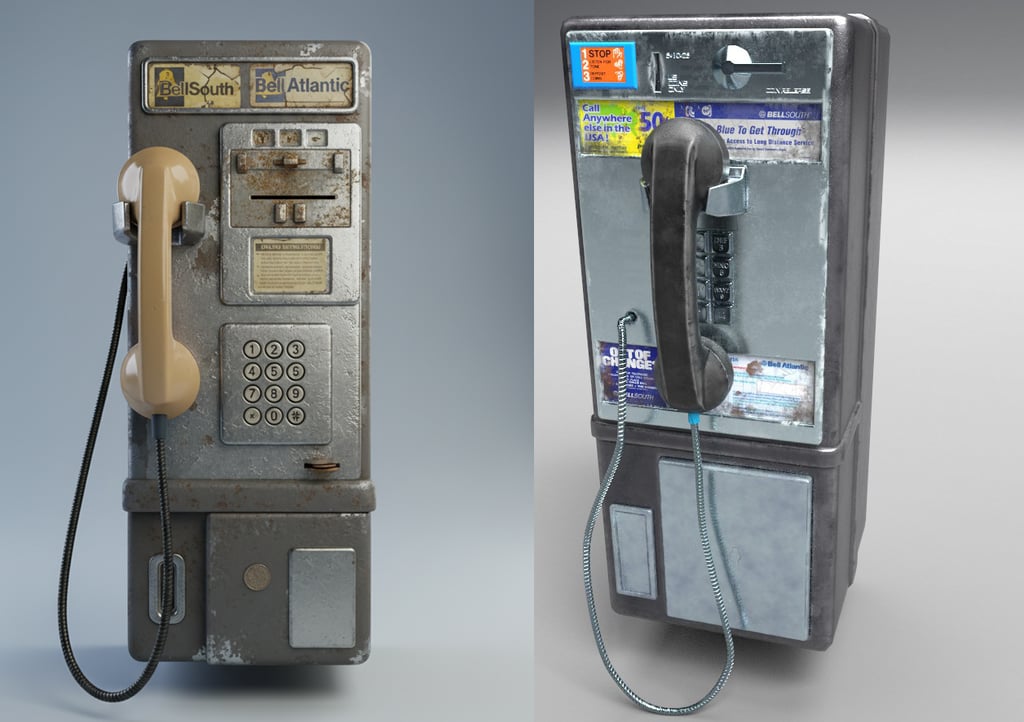
Two 3D images — one Maya, one AI.
The Maya one took me a week back in college.
The AI one took about 5 minutes
(honestly only because I generated like 8 versions to get this one)
Same idea — drastically different speed
Maya
AI
Connect
Dive deeper into the mind's frontier.
Subscribe
Official Terms & Conditions
© COPYRIGHT NOTICE
© 2025 Shawn Allen Bell. All Rights Reserved.
All content on this website — including but not limited to the Intelligence™ universe, story chapters, characters, lore, world-building materials, artwork, glyph systems, technological descriptions, logos, branding, UI/UX elements, interactive experiences, and all original media — is the exclusive intellectual property of Shawn Allen Bell.
No part of this website or its contents may be copied, reproduced, distributed, displayed, transmitted, or used in derivative works in any form or by any means without prior written permission from the copyright owner.
Unauthorized use is strictly prohibited and may result in civil and criminal liability under applicable intellectual property laws.